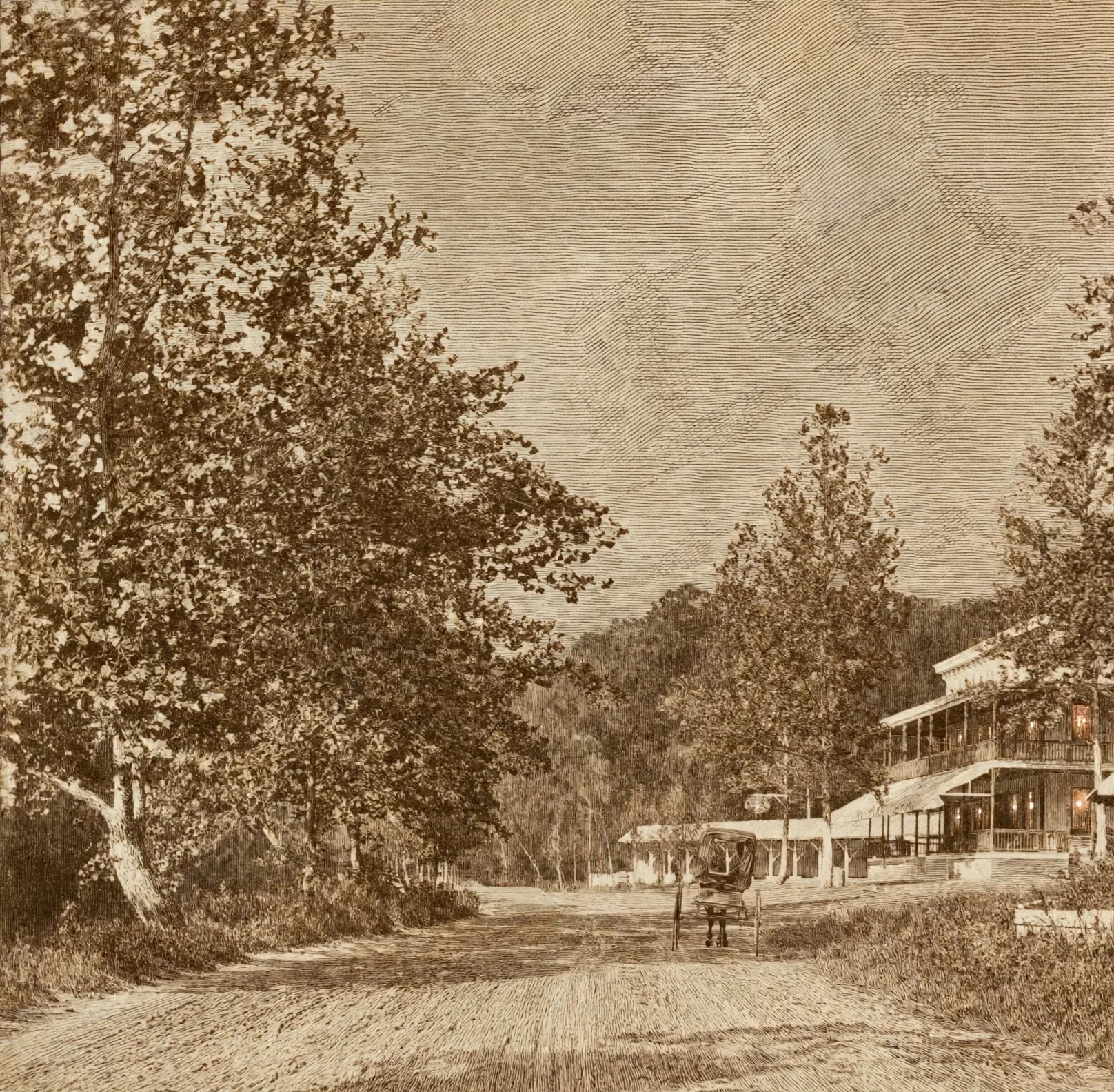
The last house on the drive kept the strangest life of the seven. Its keeper in the 1870s was Joseph Smith — and before he was a Wissahickon innkeeper he was, of all things, a founder. In Manchester, on Christmas Eve 1829, Smith devised the first co-operative social tea-party; he marched in the radical years — a Blanketeer, the history calls him, "the only one of the Blanketeers I have known" — and in 1839 he built the Salford Social Hall. Then, after thirty years in America, the old co-operator came back to England once, went home to the Wissahickon, and filled a creek-side hotel with a museum.
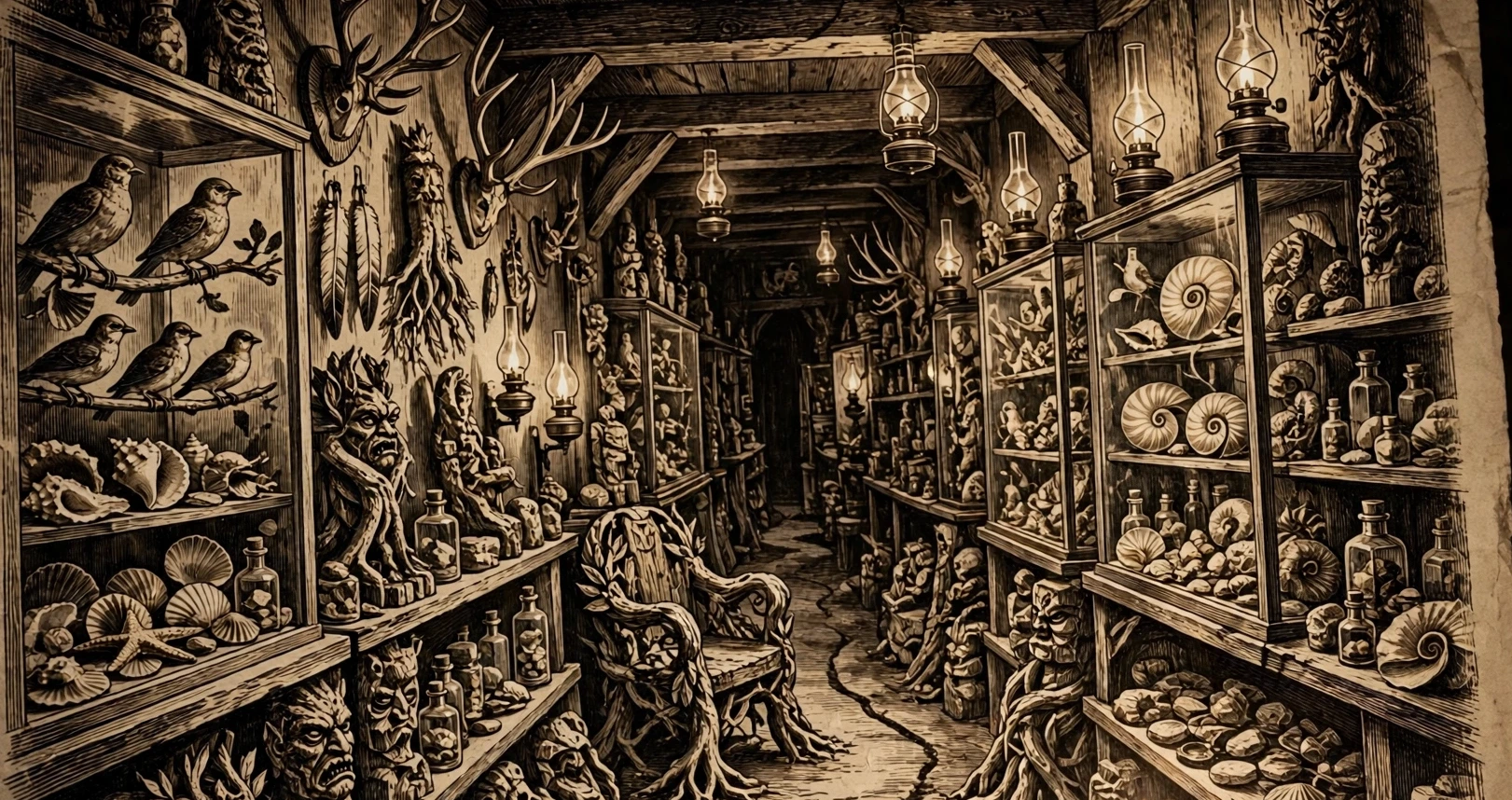
He did not build the house; he arrived in the summer of 1870 with a collection. The Miners' Journal that July recorded his cabinet of curiosities moving from Smithsonian Hall in Ashland, and his own advertisement on 27 August announced the "Maple Spring Hotel and Museum — NEW ESTABLISHMENT — JOSEPH SMITH, Late of the Smithsonian Hall, Ashland, Proprietor." The collection was famous in its small world: figures and furniture carved from gnarled laurel roots, wonders of nature and art crammed together — in the words of the co-operative movement's own history, "the most grotesque collection of nature and art ever seen since Noah's Ark was stocked."
The movement's historian, George Jacob Holyoake, came to see it — and the two books he left do not agree about what he found. The history of 1879 speaks of Smith in the present tense, keeping the hotel still. Among the Americans (1881) tells it otherwise: the visitor reached the house at midnight and found the keeper already dead, Mrs. Smith and her family still occupying the hotel, the carvings still on the walls — "The Wissahickon Museum was the most original thing I saw in America." A later edition adds a third ending, in which the old man dies of joy at the sight of his own story in print. The cellar prints all three and chooses, with its reasons.
What the paper record holds is stranger and quieter. On St. George's Day, 23 April 1879, at the Sons of St. George's banquet, a letter was read out to the assembled Englishmen announcing that Joseph Smith had died that day, at five o'clock. The period gave him a nickname — the Whittler, for the laurel roots forever under his knife. The house went on without him: Harry M. Long kept it by 1887, William Long by 1899, and in Harry Long's years — after Smith, the account is careful to say — the old museum-hotel was raided as a speak-easy. It lost its liquor privileges, and before the century was out it was razed.
Of the museum itself — the carved roots, the cases, the collection a movement crossed an ocean to see — nothing is recorded after the doors closed. The most original thing in America was dispersed without a single line saying where it went. This is the last chamber. The table is quieter here.